


Hello hello!
And welcome to another week on The Game Business.
You may have noticed we’ve changed the name of our Monday morning edition. It used to be called ‘The Game Business Micro’, and now we’ve gone with the sillier (but more accurate) ‘Here’s The Dring’.
When we started doing the Micro, it was just a news round-up. It was running through the stories of the previous seven days and providing you with the information you’d need for the week ahead.
We still do that, but it’s changed over time. Now, the bulk of the ‘Micro’ is original analysis, opinion and (sometimes) data. What’s more, although the podcast is still (relatively) short, the newsletter is actually quite chunky. So, I felt the name ‘Micro’ was both inaccurate and undersold what we were making. Hence the new name.
Out of the three newsletter/podcasts that we do, this is the one that sits behind our paywall. And we have a special Summer Sale on right now. For the next two weeks, you can get yourself an annual subscription to The Game Business at 25% off. Alongside ‘Here’s The Dring’ every Monday, you’ll also get our monthly market report and you can come to our Los Angeles event in June at no extra cost. Plus, you’ll help fund all the big free interviews we do. Want to support us? Click the button below to sign-up.
There are load of stories in this week’s edition, and the two I’ve focused on includes Netflix’s surprising decision to close its best studio, and 2K’s equally surprising decision to open a new sports developer in the same city as EA Sports.
Let’s dive in!
2K opens a sports developer on EA’s lawn… is it making a football game?
In Brief: 2K Games has launched Small Axe Studios. The new developer is led by EA Sports veterans and is based in the same city: Vancouver, Canada. The team is building the ‘next blockbuster sports franchise’ and wants to ‘redefine the future of sports video games’.
What You Need To Know:
The studio is made up of former EA Sports development leaders including VP and executive producer Aaron McHardy (EA Sports FC, Madden), head of design Gary Paterson (FIFA, NBA Live), head of operations Tom Pan (FIFA, UFC, SSX), head of engineering Mike Thompson (NHL, UFC), and technical art director John Cruz (FIFA, NBA, Skate).
Other key hires include head of HR Trisha MacWan (Glu Mobile), animation director Brend Breedveld (Relic Entertainment) and art director Karl Gryc (Blackbird Interactive).
2K is already a major player in sports games, and is responsible for the NBA 2K, WWE 2K and PGA 2K franchises. Its main sports studio is Visual Concepts, which dates back to 1998 and was originally owned by Sega.
Many of the people working for Small Axe worked on the EA Sports FC/FIFA series, giving rise to the expectation that this developer is creating a new football/soccer game.
The company’s name is due to the belief that ‘with vision, drive, and focus, a small axe can take down a big tree’.
The studio came out of 2K Sports Lab, which was set-up in 2023 to research and develop future sports games.
My Take:
When EA ditched the FIFA licence in 2023 and rebranded its game as ‘EA Sports FC’, the football governing body was defiant.
FIFA president Gianni Infantino declared that the group would be back, and that “the only authentic, real game that has the FIFA name will be the best one available“.
“Not a chance,” I said at the time. FIFA might have some success on mobile around the World Cup, and the FIFA World Cup cloud game that Netflix commissioned was an interesting idea… but ‘the only authentic, real game’? No way.
Hello hello!
And welcome to another week on The Game Business.
You may have noticed we’ve changed the name of our Monday morning edition. It used to be called ‘The Game Business Micro’, and now we’ve gone with the sillier (but more accurate) ‘Here’s The Dring’.
When we started doing the Micro, it was just a news round-up. It was running through the stories of the previous seven days and providing you with the information you’d need for the week ahead.
We still do that, but it’s changed over time. Now, the bulk of the ‘Micro’ is original analysis, opinion and (sometimes) data. What’s more, although the podcast is still (relatively) short, the newsletter is actually quite chunky. So, I felt the name ‘Micro’ was both inaccurate and undersold what we were making. Hence the new name.
Out of the three newsletter/podcasts that we do, this is the one that sits behind our paywall. And we have a special Summer Sale on right now. For the next two weeks, you can get yourself an annual subscription to The Game Business at 25% off. Alongside ‘Here’s The Dring’ every Monday, you’ll also get our monthly market report and you can come to our Los Angeles event in June at no extra cost. Plus, you’ll help fund all the big free interviews we do. Want to support us? Click the button below to sign-up.
There are load of stories in this week’s edition, and the two I’ve focused on includes Netflix’s surprising decision to close its best studio, and 2K’s equally surprising decision to open a new sports developer in the same city as EA Sports.
Let’s dive in!
2K opens a sports developer on EA’s lawn… is it making a football game?
In Brief: 2K Games has launched Small Axe Studios. The new developer is led by EA Sports veterans and is based in the same city: Vancouver, Canada. The team is building the ‘next blockbuster sports franchise’ and wants to ‘redefine the future of sports video games’.
What You Need To Know:
The studio is made up of former EA Sports development leaders including VP and executive producer Aaron McHardy (EA Sports FC, Madden), head of design Gary Paterson (FIFA, NBA Live), head of operations Tom Pan (FIFA, UFC, SSX), head of engineering Mike Thompson (NHL, UFC), and technical art director John Cruz (FIFA, NBA, Skate).
Other key hires include head of HR Trisha MacWan (Glu Mobile), animation director Brend Breedveld (Relic Entertainment) and art director Karl Gryc (Blackbird Interactive).
2K is already a major player in sports games, and is responsible for the NBA 2K, WWE 2K and PGA 2K franchises. Its main sports studio is Visual Concepts, which dates back to 1998 and was originally owned by Sega.
Many of the people working for Small Axe worked on the EA Sports FC/FIFA series, giving rise to the expectation that this developer is creating a new football/soccer game.
The company’s name is due to the belief that ‘with vision, drive, and focus, a small axe can take down a big tree’.
The studio came out of 2K Sports Lab, which was set-up in 2023 to research and develop future sports games.
My Take:
When EA ditched the FIFA licence in 2023 and rebranded its game as ‘EA Sports FC’, the football governing body was defiant.
FIFA president Gianni Infantino declared that the group would be back, and that “the only authentic, real game that has the FIFA name will be the best one available“.
“Not a chance,” I said at the time. FIFA might have some success on mobile around the World Cup, and the FIFA World Cup cloud game that Netflix commissioned was an interesting idea… but ‘the only authentic, real game’? No way.
EA Sports FC is too strong. It’s a game that has been iterated upon and perfected over 30 years. It has countless football partnerships and its technology and brand can be found ingrained in the sport around the world.
And it’s a complex sport to work with. Unlike American sports, there is no centralized body you can just do a deal with and get access to all the players and clubs and leagues. EA Sports FC is made up of hundreds of individual licensing agreements. To deliver a game of that quality, with that level of depth, and all those partnerships… it would take an enormous amount of time, patience and money.
Not only that, you’d then need to deliver some form of innovative new game concept that will convince gamers, who are highly engaged in EA’s sticky, live-service Ultimate Team mode, to switch sides.
The only real convincing rival EA Sports FC/FIFA has ever had was Konami’s Pro Evolution Soccer, but that didn’t have the resources to truly compete. In the end, it switched to a free-to-play model under the name eFootball, and it has found some success on platforms where EA Sports FC is weakest.
You can count the number of companies who could realistically take on EA Sports FC on one finger. And that company is 2K Games.
It’s the only business that knows what it takes to build a game of this scale. It has its eyes wide open to the challenges involved. And it’s a company that has successfully faced-off against EA in the past. NBA 2K is the biggest basketball game in the world, while 2K’s golf, tennis and wrestling games also perform very well.
It’s not infallible. Its recent attempt to resurrect NFL 2K never happened, and it dropped its hockey and baseball titles. But it does get it. And it clearly has a desire to do more. The 2K Sports Lab is all around finding new opportunities in sports games, and let’s not forget it tried to buy Codemasters and the F1 franchise (until, yep, EA swooped in at the eleventh hour with a better offer).
I’ve asked Take-Two CEO Strauss Zelnick a few times about moving into football (or soccer, if you prefer). 2K’s sports games, broadly speaking, are very US-centric. And football is global. Surely, it’s a logical step? Zelnick would always respond by pointing out the complexities involved in football, and then remind me that Take-Two does have a football game: Zynga’s mobile game Top Eleven.
But he’s never outright ruled it out. So could Small Axe, a new studio that is filled with FIFA/EA Sports FC veterans (and features a logo that looks a lot like a football team logo) be 2K’s bid to take on soccer? Could it even pick up the FIFA licence, which it doesn’t really need but will certainly give it a leg-up in terms of attention?
There’s a bit of jumping to conclusions here. 2K has only said this is about redefining ‘the future of sports games’. They could be making a pickleball game for all we know. And there’s a reason why 2K hasn’t tried to make a football title before… it’s going to be really difficult.
But with a bounce in interest following the last World Cup, EA becoming a private company, and with Take-Two sitting on nearly $1.4 billion in cash… well, maybe now is the time to take a crack at one of the biggest names in video games.
And as anyone from the world of sport will tell you, competition is a good thing.
Netflix closes its best video game studio
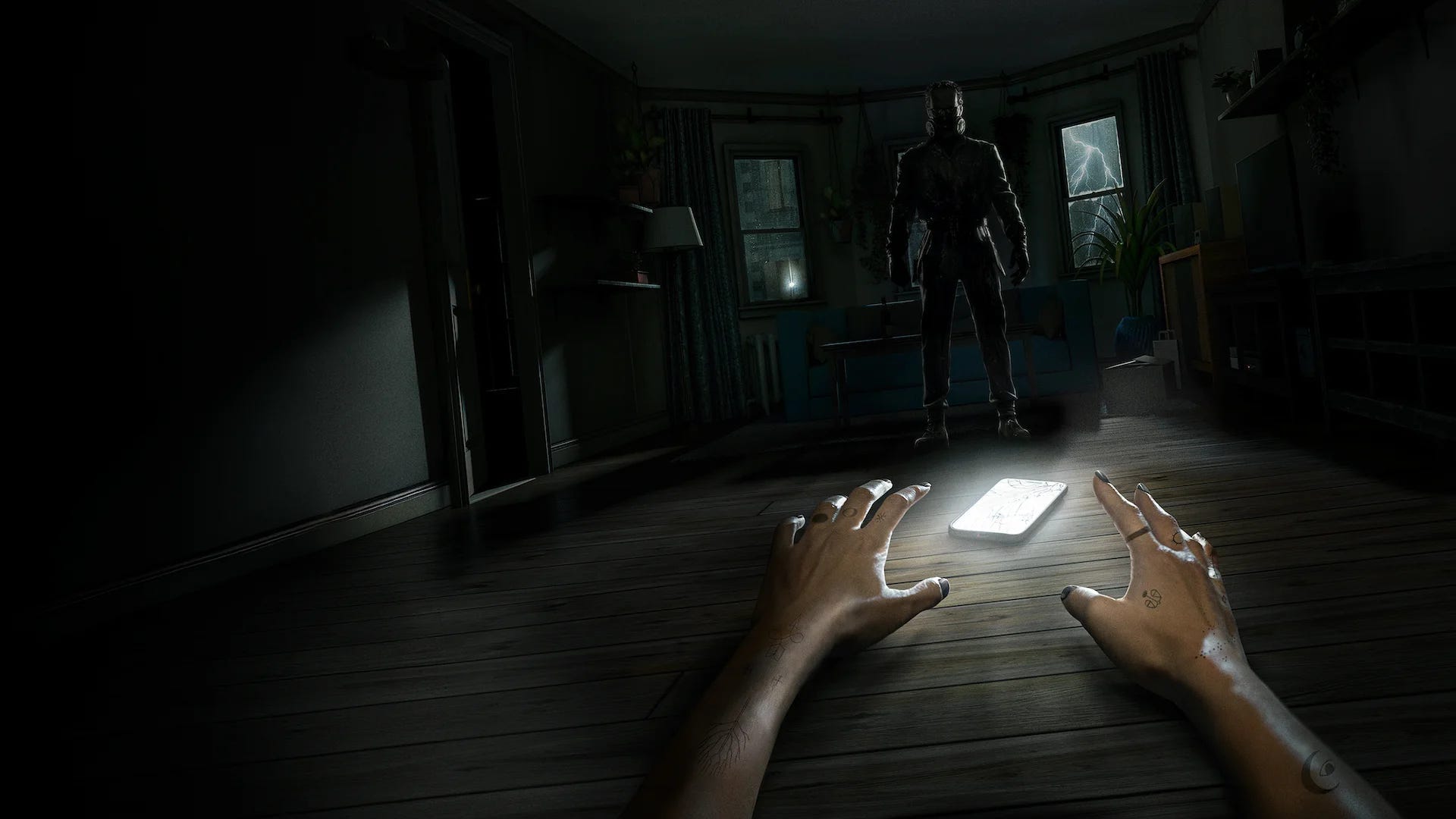
In Brief: Netflix is closing Night School Studio, alongside Helsinki-based Moonloot Games. Moonloot had yet to release a game, whereas Night School was responsible for recent horror hit Unhinged and last year’s Black Mirror tie-in Thronglets.
What You Need To Know:
Netflix cut back its game division during 2024. It cancelled six projects, shut down internal teams Team Blue and Boss Fight Entertainment, and sold back Spry Fox to its founders.
Boss Fight Entertainment reformed as Bossfight Entertainment.
Netflix also refocused its business into four divisions: Mainstream Games, Narrative Games, Party Games and Kids Games.
Night School was critically acclaimed for its narrative-based games that approached entertainment in unique ways. It was responsible for the Oxenfree series, it made tie-in games to Mr Robot and The Mummy, and last year it created a Black Mirror tie-in title called Thronglets.
This year it released Unhinged, the horror game that we featured just a few weeks ago. Netflix had previously said that Unhinged, alongside FIFA World Cup, were one of the company’s ‘most successful cloud game debuts’.
My Take:
I’ve got involved in a couple of debates around Netflix and its video game ambitions over the past few months.
The company has spent a lot of money not really going anywhere in games. It’s opened studios and then closed them again. It had a strategy, then changed it, then changed it some more. And so far, its success has been limited. Analysts have opinions on this.
But that’s all part of the journey. And this current version of Netflix’s games strategy is legitimately exciting. It wants to be a destination for families and kids, and reach a broader audience through story-based games and mainstream experiments. It’s a strategy that adds to the video game business, rather than competes with the existing platforms. It leans into the Netflix audience, and potentially unlocks that audience for different game experiences.
Beyond that, it’s just struck a partnership with Unity to support the platform more robustly (more on that tomorrow). And it’s even getting involved in marketing games, with the next GTA 6 reveal set for August 27 via its service. Netflix is taking games seriously… or so I thought.
I was taken aback by the closure of Night School. It’s Netflix’s most consistent and most interesting (and dare I say, best) developer, which is constantly challenging what it means to be a video game, and finding ways to reach new audiences through tie-ins and experimental concepts. Unhinged was a really promising release, and in our interview just a few weeks ago, the conversation was all around what they do next with the IP. The mood was buoyant.
Just a week after that interview, we spoke with Netflix’s big streaming rival Amazon Luna, who also poured praise on the game. They were impressed and inspired by it. It sounded like they wish they’d made it.
It’s fair to say that Night School is a good team. And it fits exactly with what Netflix say it is trying to achieve with its story-based games.
Perhaps this is just reflective of where the industry is headed. Does Netflix need to own studios, and all the costs associated with them, to deliver this strategy? That’s not how it works with TV and film. All it needs is a group of leads, and outsource the rest.
Maybe that’s the thinking. And perhaps, like with cozy game developer Spryfox (which was spun back out of Netflix) or Squid Game studio Boss Fight (which reformed shortly afterwards), the Night School team will reform, and continue making games for the likes of Netflix and Amazon. Perhaps that’s the model these streaming giants prefer.
That might explain it. Because otherwise, I find this decision a particularly confusing one.
Meanwhile…
Nexon saw Q2 revenue rise 2% to $761 million, driven by continued success for Arc Raiders and MapleStory. Arc Raiders now has hit 16.3 million sales after selling a further 800,000 units during the quarter. A large content update is scheduled for October.
Mattel has announced the formation of Mattel Game Studios, a global development organisation that will create games based on the company’s IP. It follows the acquisition of Mattel163 in February, which was previously a joint venture with NetEase. The new group will oversee existing mobile games, and upcoming titles coming to Roblox and Fortnite.
Square Enix had a strong Q1 with profit rising 175.5% to $83 million. This was driven by Final Fantasy 7: Rebirth coming to Nintendo Switch 2 and Xbox formats in June. The firm also saw an uptick in users for the MMO Final Fantasy XIV.
Bandai Namco’s Digital segment, which includes games, saw sales drop 15.6% to $573 million, while profit fell 30.9% $94.5 million. This was due to there being no major PC or console release. In the corresponding quarter, it released Elden Ring: Nightregn. Upcoming titles include Ace Combat 8: Wings of Thieve in October and The Blood of the Dawn Walker in September.
Sega’s entertainment division, which includes games, did better than expected during Q1 with a slight increase to $432 million. Its upcoming slate includes Stranger Than Heaven in January 2027, and Persona 4 Rival in February 2027.
Remedy’s Q2 revenue hit €10.2 million, which is down 40% year-on-year, with an operating loss of €3.9 million. Part of the decline is due to the game FBC: Firebreak launching in the corresponding quarter last year. Its next big game is Control Resonant in September, which launches in a competitive window but has attracted a large number of wishlists.
NC (formerly NCsoft) will take over the global publishing of Throne and Liberty. The MMO was developed by NC and its studio FirstSpark Games, and had been published by Amazon Games globally. Amazon is shifting away from MMOs and towards more mainstream games better suited to its Luna streaming platform.
Pokémon spin-off Pokopia has now sold five million copies worldwide.
Indie hide and seek hit Meccha Chameleon has now sold 20 million copies.
Co-op adventure game Big Walk has sold 1m units worldwide. The game is by Australian studio House House, which is famous for Untitled Goose Game.
City builder Against the Storm has now sold three million copies in less than three years, reports publisher Hooded Horse.
Supermassive Games, the UK developer of story horror titles such as Until Dawn and The Dark Pictures Anthology, is laying off a further 75 employees, which is its third round of job cuts.
CD Projekt has made some cuts to its Project Sirius team, the new multiplayer spin-off to The Witcher series. Nine employees have been cut, with a further nine to be offered roles elsewhere. The cuts were to ‘reflect the project’s needs at this stage of development’.
UK charity GamesAid has raised £82,000 that will be distributed among four charities: AFK, Autistica, Rays of Sunshine Children’s Charity, and Solving Kids’ Cancer UK. Each received £20,500.
QA games specialist Testronic has appointed Sonia Kerr as CEO, succeeding Sharon Baylay-Bell, who moves into the role of company chair.
That’s it from us today. Join us back tomorrow for a bumper interview with Unity CEO Matthew Bromberg. And then on Thursday, we will preview Gamescom and discuss what PlayStation publishers ought to be thinking about ahead of the end of the disc! Until then, thank you for reading.


